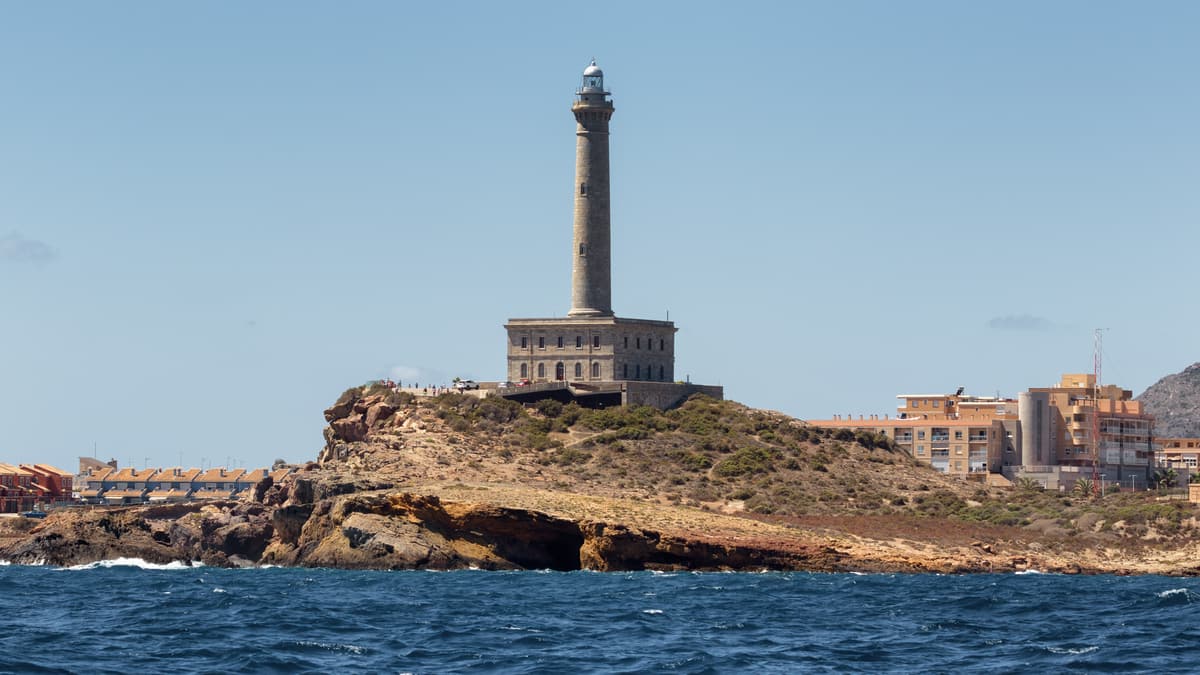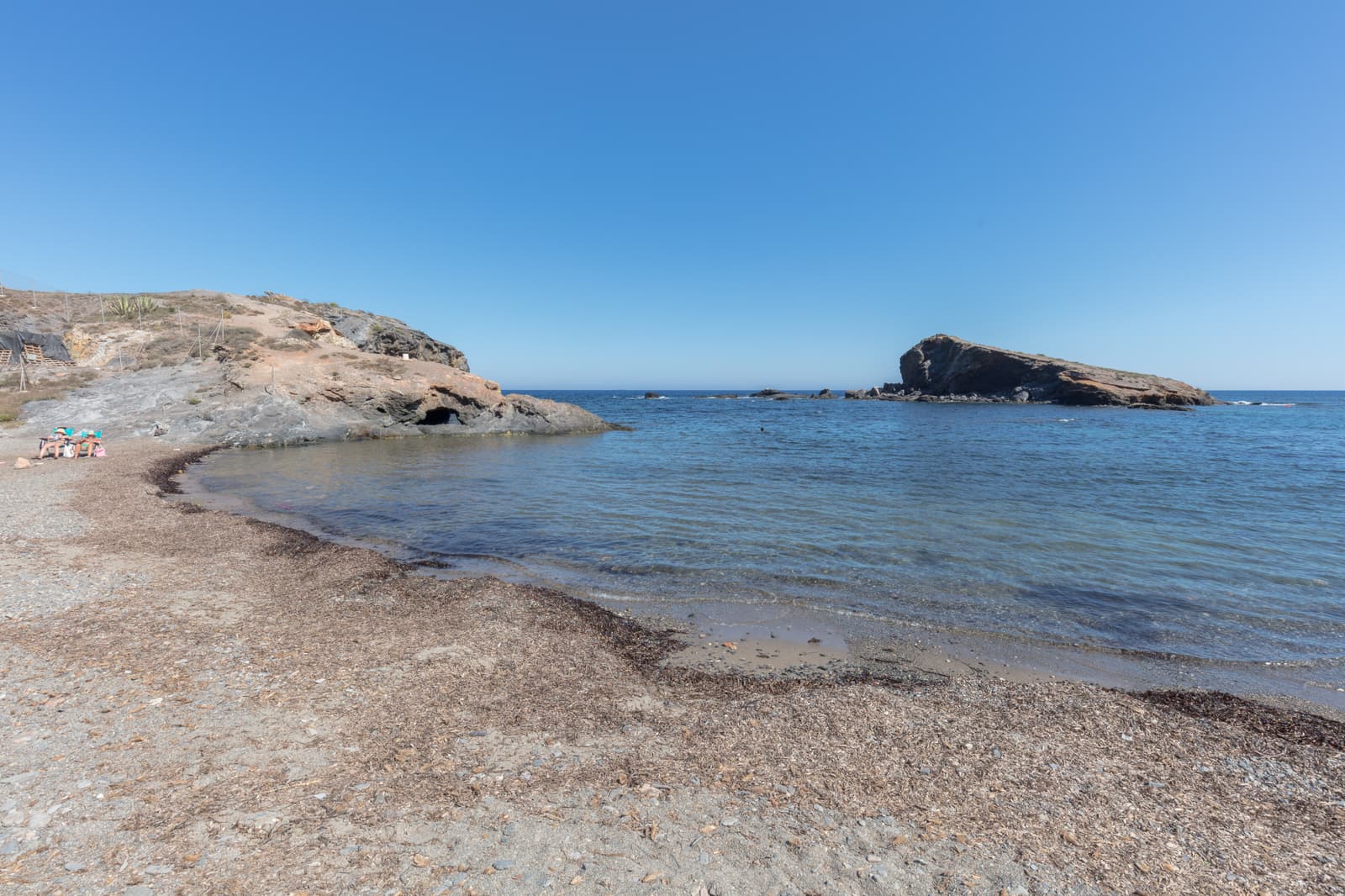
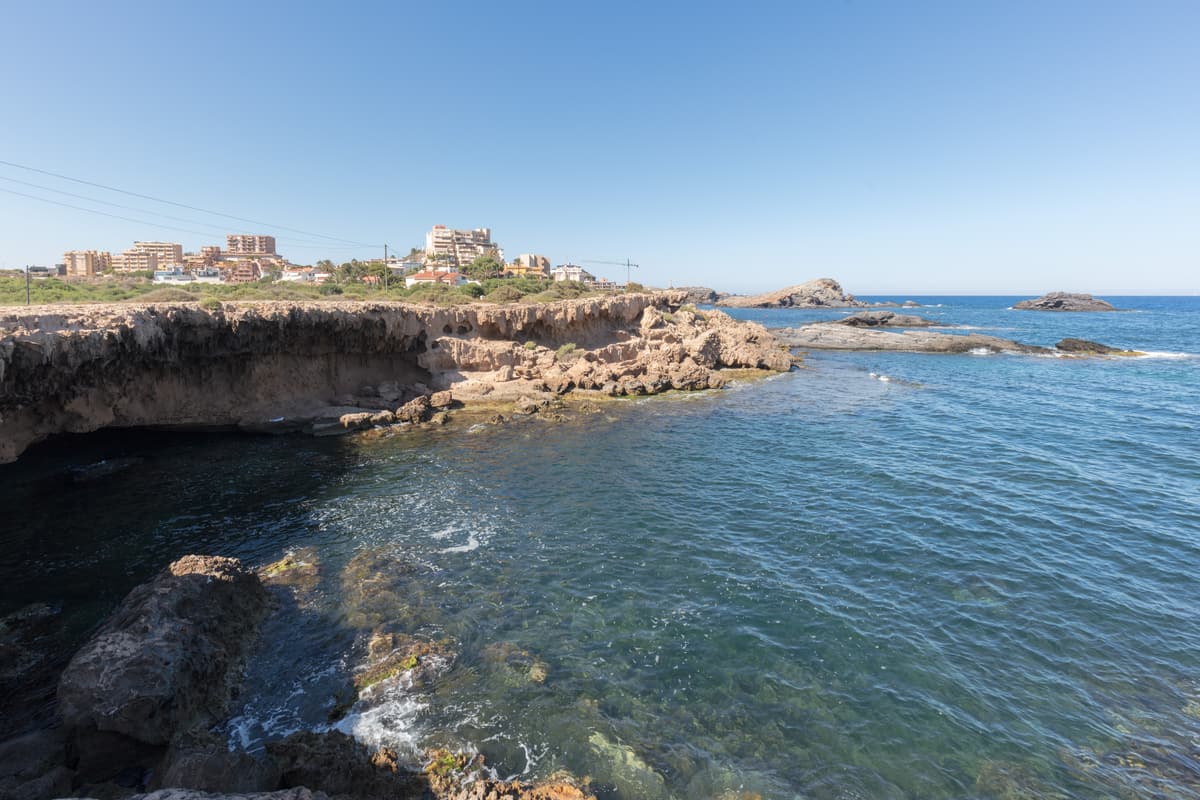
Cabo de Palos has two kinds of shore. Around the headland the coast is a string of small rocky coves — dark volcanic and metamorphic rock, a little coarse sand or pebbles, and water so clear that the fish are visible from the path. North of the village, on the Mediterranean side of La Manga, the rock gives way to a long, straight, sandy beach.
The coves are for snorkelling and for people who do not mind a towel on the rocks. Families with small children usually prefer Playa de Levante, Cala Reona or the calm lagoon beaches of the Mar Menor a short drive away.
Top things to do: Coves & Beaches
Cala Túnez and Cala Flores
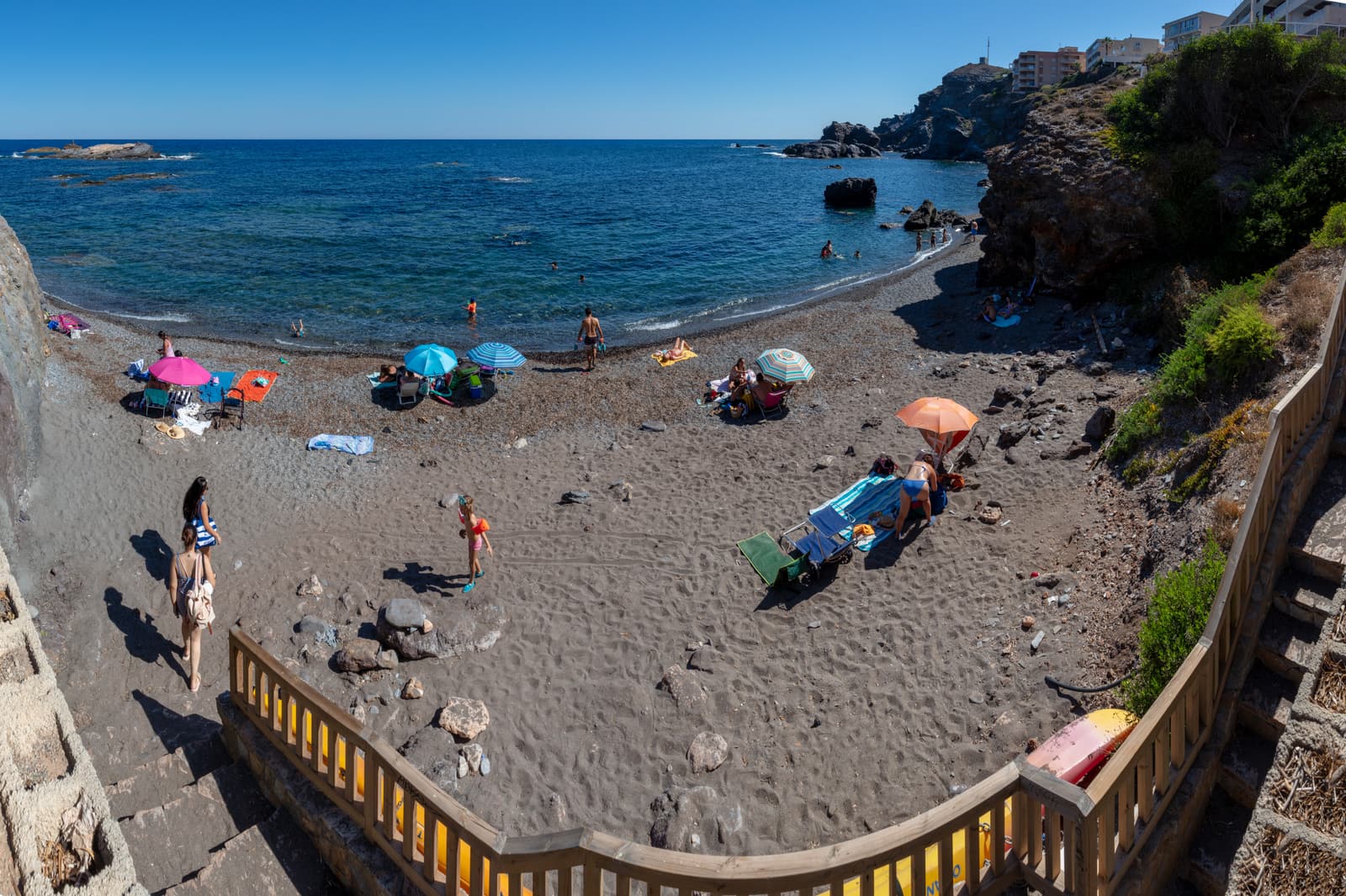
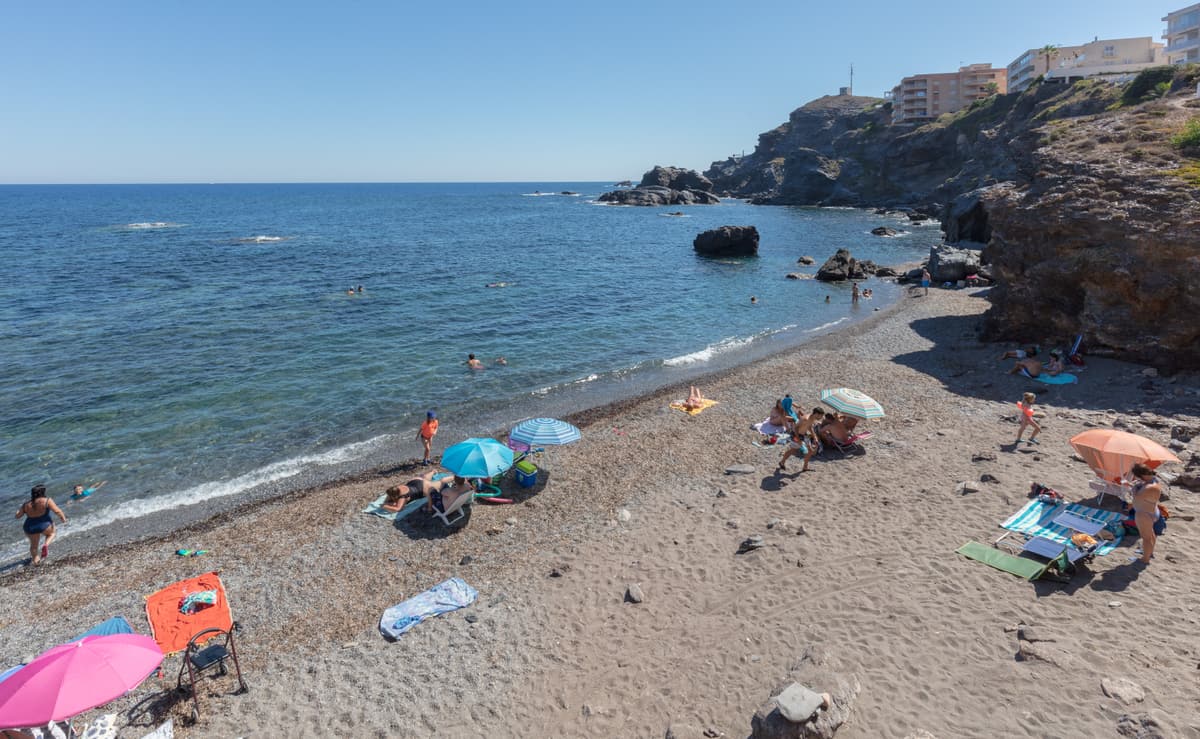
Two neighbouring coves on the south side of the cape, in a residential area a few minutes’ walk from the centre. Small patches of sand and flat rocks to enter from; clear, usually calm water unless the wind is from the south-west. Good first snorkelling spots.
Cala Fría and the lighthouse coves
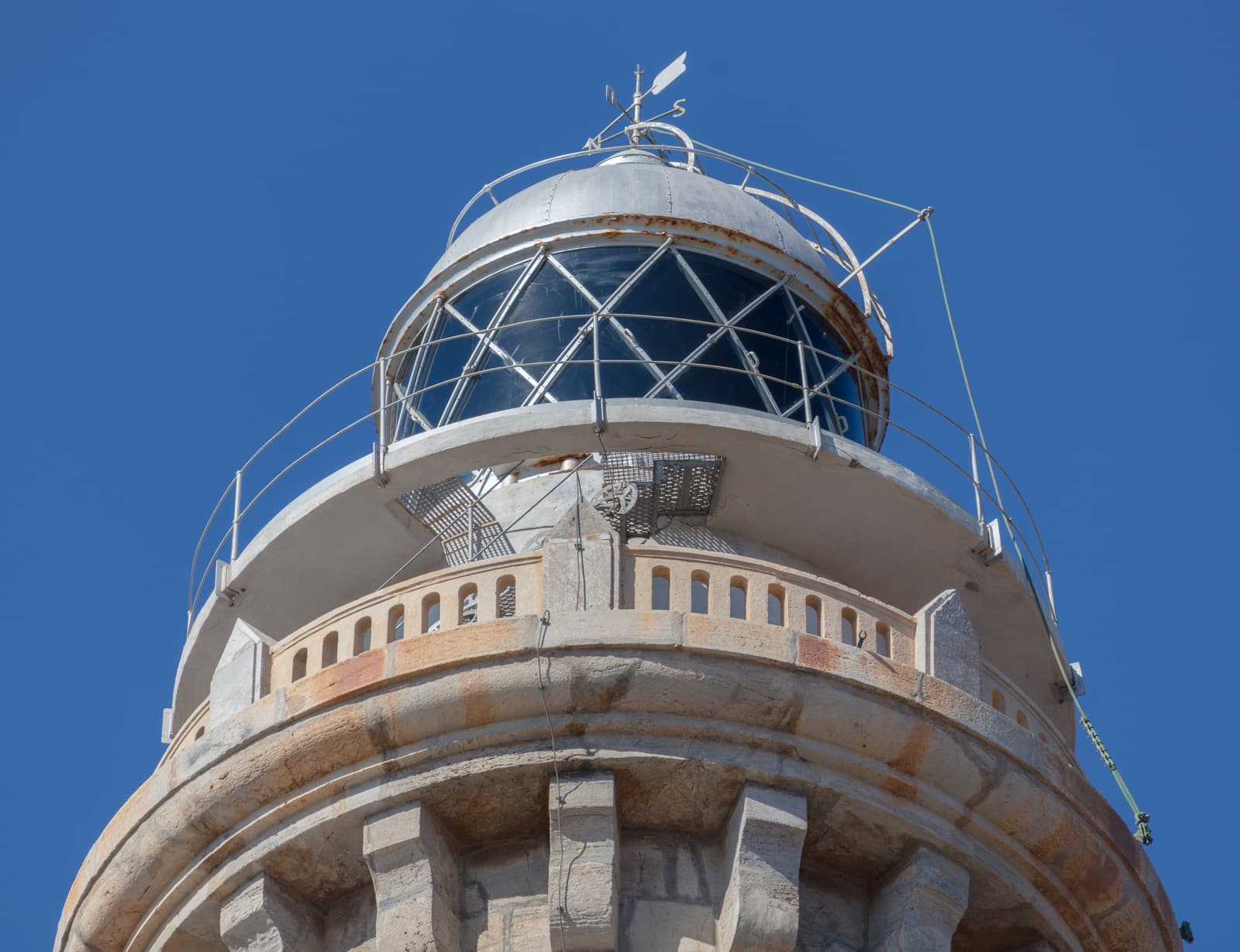
Directly below the lighthouse, reached by steps and paths. Deeper water close in, lots of fish, and the tower overhead. The entry is over rock, so water shoes help.
Cala Reona
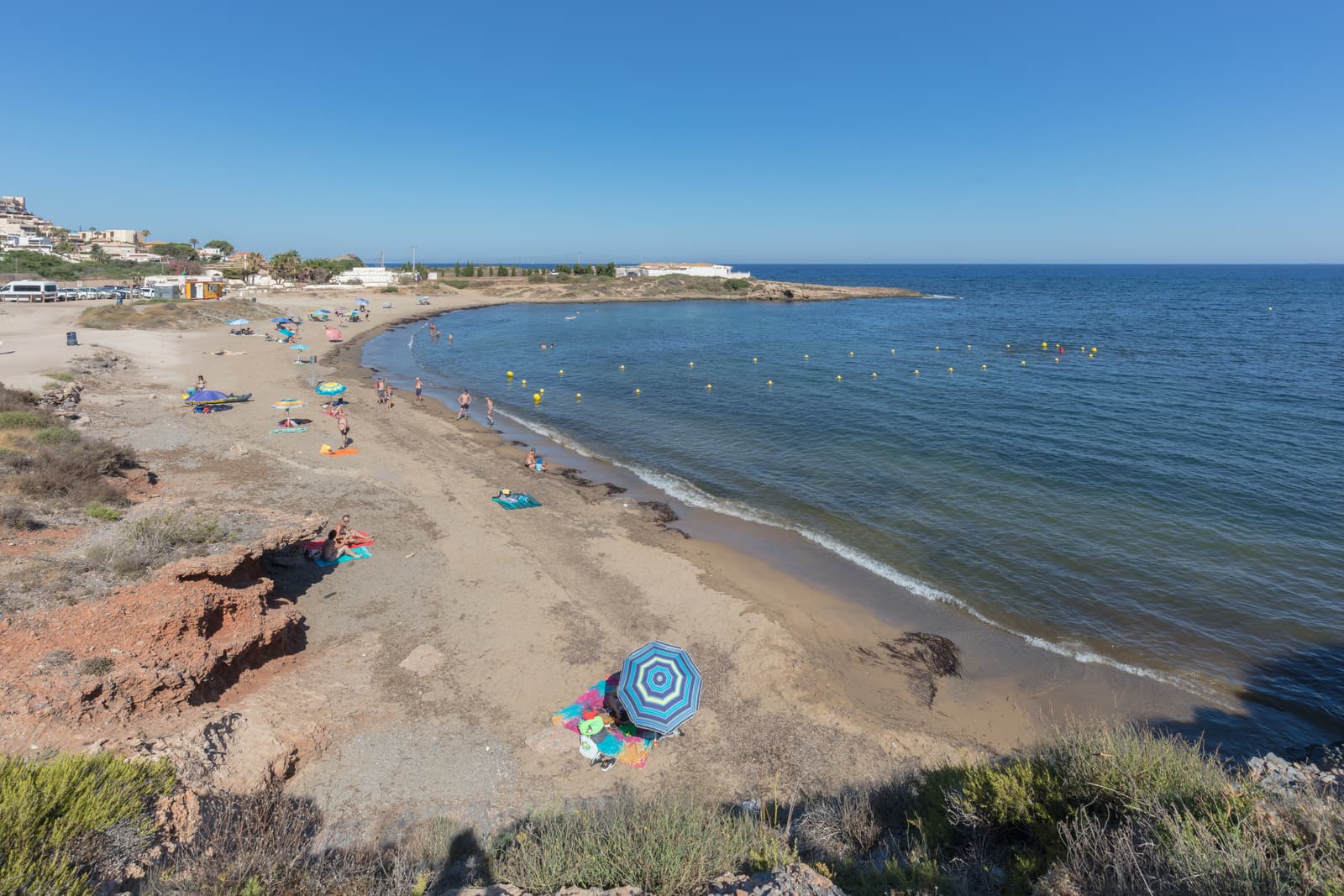
The last cove to the south-west and the sandiest: a proper little beach between two headlands, with parking behind it. This is where the coastal path into Calblanque begins.
Playa de Levante
The long open beach of fine sand that runs north from the village along the Mediterranean side. Plenty of room even in August, waves when the east wind blows, and seasonal lifeguards and beach bars. Behind its southern end are the protected dunes of Las Amoladeras.
Snorkel properly
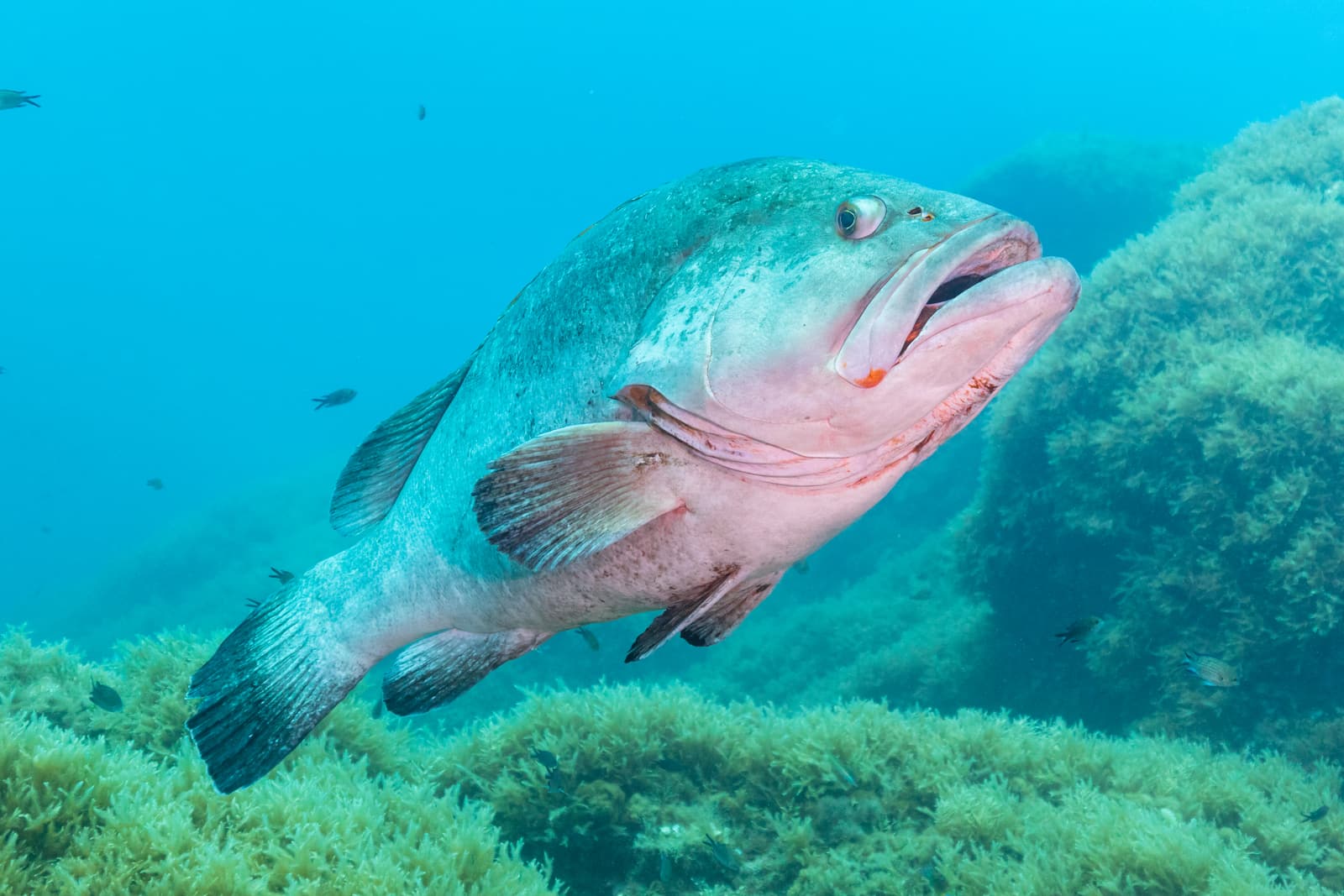
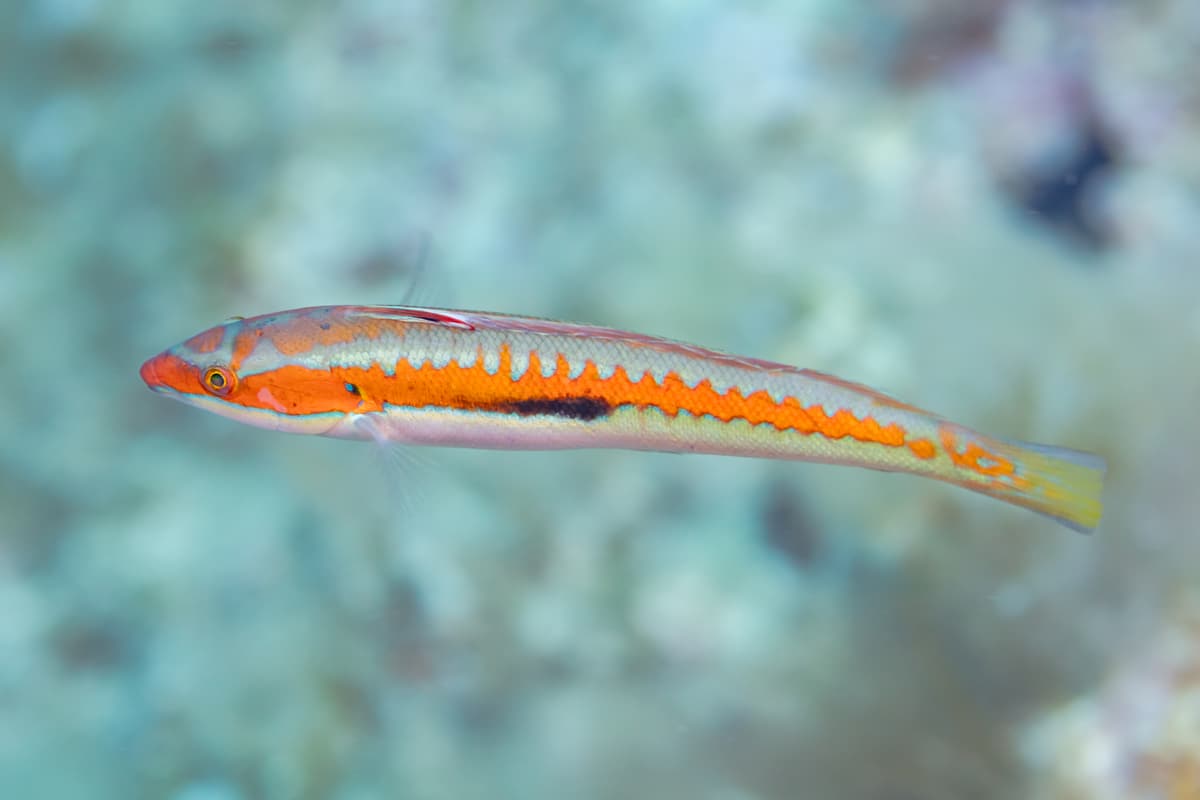
Swim along the rocky sides of the coves rather than over the sand in the middle. Look for rainbow wrasse, saddled and two-banded bream, damselfish and, in cracks, octopus and small morays. A guided kayak-and-snorkel tour reaches spots that are awkward from land.
How to get to Coves & Beaches
- All the coves are within walking distance of the village centre: about ten minutes to Cala Flores and Cala Túnez, fifteen to the lighthouse coves, and around twenty-five minutes (or a short drive) to Cala Reona.
- Street parking near the southern coves is residential and tight in summer. Cala Reona and Playa de Levante have larger parking areas, which still fill by late morning in August.
Insider tips
- Wind decides everything. With levante (east wind) the south-facing coves are sheltered; with lebeche (south-west wind) try the north side or the Mar Menor.
- Bring water shoes, a mask and something to sit on. There is little natural shade.
- Jellyfish appear some summers on the Mediterranean side, depending on currents; look before you jump.
- Fishing and collecting are restricted in and around the marine reserve. Leave everything where it is.
- Most coves have no lifeguard. Do not swim out around headlands when there is swell.
Best tours: Coves & Beaches
These top-rated experiences are the easiest way to see Coves & Beaches:
 Guided kayak tour from €35
 Cabo de Palos: Kayak Sightseeing Tour with Snorkeling
The most-reviewed Cabo de Palos activity on GetYourGuide. A guide leads you by kayak along the coves and cliffs of the cape, then you stop to snorkel over the posidonia meadows and rocky reefs of the Cabo de Palos and Islas Hormigas Marine Reserve. No previous kayaking experience is needed in calm conditions.
- Paddle below the cliffs and the lighthouse
- Snorkel stop over the reserve’s seabed
- Kayak, paddle and snorkel gear provided
 Guided kayak tour from €32
 Cabo de Palos: Calblanque & Coves Kayak Tour with Guide
A guided paddle south from Cabo de Palos along the protected coast of Calblanque Regional Park, past volcanic cliffs, into a sea cave and on to small beaches reached only on foot or by water. Reviews are mixed (3.7 out of 5 when we checked), mostly depending on sea conditions on the day, so pick a calm morning.
- Paddle towards Calblanque Regional Park
- Volcanic cliffs and a sea cave
- Stops at beaches you cannot drive to
 Guided swim from €25
 Swimming in the Cabo de Palos Marine Reserve
A guided open-water swim from cove to cove inside the marine reserve. You swim in a small group with a guide who knows the conditions, over rocks and seagrass where wrasse, bream and sometimes octopus are easy to spot. It is a new listing with few reviews so far, all of them excellent.
- Open-water swimming with a guide
- Coves with very clear water
- A protected natural setting